What if one inspection could lower the windstorm part of your homeowners insurance in Jacksonville Beach? If you live in The Beaches, you feel the impact of coastal wind exposure, and premiums can add up fast. The good news is that wind mitigation credits can reduce what you pay when your home has the right features. In this guide, you’ll learn which upgrades matter most, how inspectors document them in Florida, and when to time your inspection so the credits actually show up on your policy. Let’s dive in.
Wind mitigation basics
Wind mitigation credits are discounts most Florida insurers apply to the windstorm portion of your policy when your home has certain wind‑resistant features. Credits are based on a standardized inspection that uses Florida’s Wind Mitigation Inspection Form (OIR‑B1‑1802). Insurers review the signed form, your permits, and product labels to decide which credits you qualify for. The more verified features you have, the more likely you are to reduce the wind part of your premium.
Why this matters in Jacksonville Beach
Homes in The Beaches area face higher wind exposure than inland properties, and many are in the state’s wind‑borne debris region. That means insurers look closely at how your roof, openings, and connections handle high winds. Florida’s building code has been strengthened over time, so homes built or re‑roofed under newer codes, often post‑2001 or 2002, can qualify for additional credits. It pays to check Duval County permit records for proof of roof replacements or structural upgrades, since permits often increase the level of credit.
Who can inspect your home
Florida requires the OIR‑B1‑1802 form to be completed and signed by an approved professional. That can be a state‑licensed home inspector, general contractor, architect, professional engineer, or certain building officials. Some insurers accept licensed roofing contractors as well, but acceptance varies by company. Always confirm with your insurer which credentials they will accept before you order the inspection.
Features insurers credit most
Roof shape and geometry
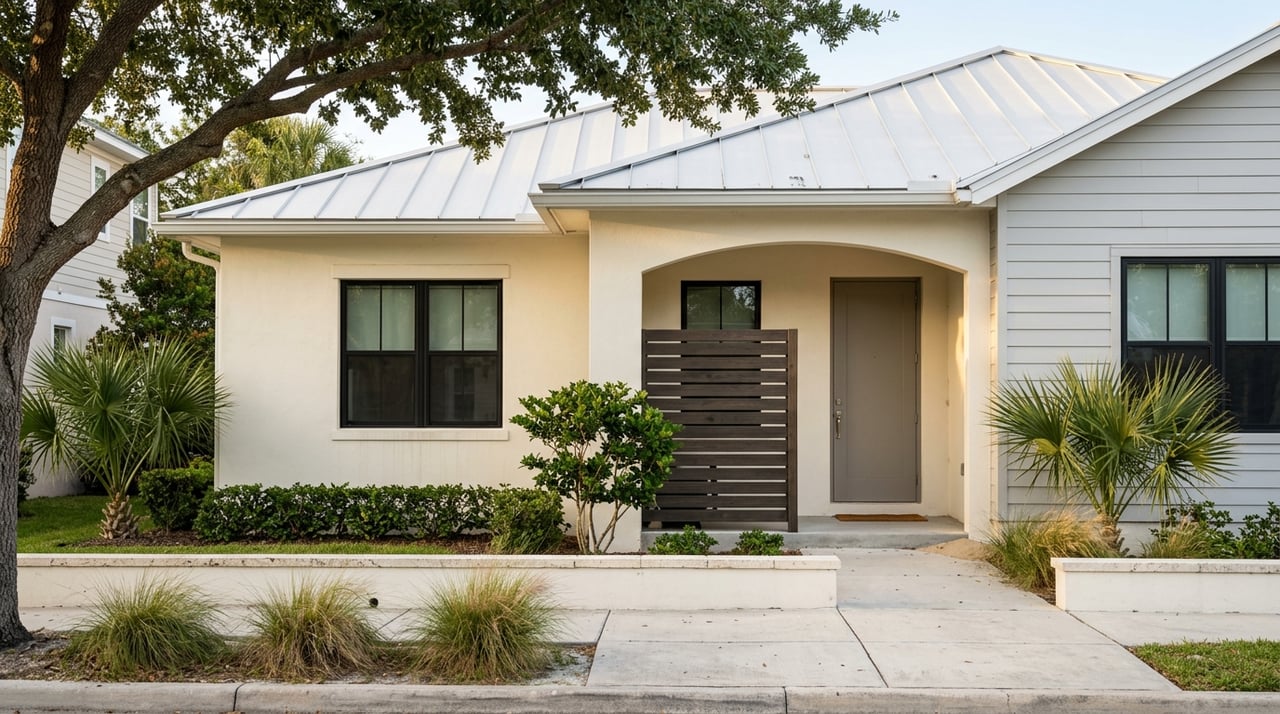
Inspectors classify your roof as hip, gable, or a combination. Hip roofs generally perform better in wind because they reduce uplift forces at gable ends and often earn larger credits. If you have complex rooflines, dormers, or large overhangs, that can affect the classification.
Roof‑to‑wall connections
Metal clips, straps, or hurricane ties that connect the roof to the walls create a continuous load path. Stronger connections reduce the chance of the roof separating from the walls during high winds. Inspectors look for visible clips or straps in the attic or documented connectors through permits and photos.
Roof deck attachment
How the roof deck is nailed to the framing matters. Closer nail spacing and ring‑shank nails increase resistance to uplift and reduce blow‑off risk. Inspectors often verify the sheathing type and nail pattern during an attic inspection or by reviewing re‑roof permits.
Roof covering and age
Shingle, tile, and metal roofs can all perform well when properly installed. Newer coverings installed under a valid permit often help you qualify for credits tied to roof age and code compliance. Inspectors note the roof type and effective year, and they may request the re‑roof permit to support the credit.
Secondary water resistance (SWR)
SWR is an underlayment or barrier beneath the roof covering that slows water intrusion if the outer layer is damaged. It can significantly reduce interior water damage during storms. Many insurers give a specific credit when SWR is documented through permits or photos.
Opening protection
Impact‑rated windows and doors, or certified shutters, help prevent internal pressurization and water intrusion. Inspectors look for product labels or certifications, such as Miami‑Dade or TAS approvals, and they note whether all openings are protected. Full, documented protection usually earns the largest opening‑protection credit.
Load path and gable bracing
Braced gable ends, shear walls, and continuous strapping work together to move wind forces down to the foundation. Without a complete load path, a single weak connection can fail. Inspectors may need attic access and sometimes professional verification to confirm these elements.
Documentation and access
Permits, labels, and photos often determine the size of your credits. Easy attic access allows the inspector to confirm straps, nailing, and deck thickness. Limited access can reduce the number of credits available or force a more invasive inspection.
How insurers apply credits
Most companies apply credits only to the windstorm portion of your premium. Each insurer sets different credit values, and some cap the total reduction or require permits for certain discounts. Credits can add up when multiple features are documented, but results vary by company and property classification. Keep in mind that credits reduce premiums, not hurricane deductibles or exclusions.
The documents you will need
- Completed OIR‑B1‑1802 wind mitigation inspection form signed by an approved professional.
- Permits and final inspections for roof replacements, shutter installations, or structural retrofits.
- Manufacturer labels or certification for impact‑rated windows, doors, and shutters.
- Photos of roof, attic connections, and product labels that match the inspection form.
Best timing for your inspection
- Before renewal: Order your wind mitigation inspection ahead of your renewal date, so credits can be applied in time.
- During escrow: As a buyer, get the inspection early in the contingency period. It can guide negotiations and inform insurance quotes.
- After upgrades: Complete retrofits, close permits, then schedule the inspection so the new features are documented.
Realistic upgrade paths for The Beaches
Scenario A: Older gable home, minimal mitigation
A pre‑1990 wood‑frame home with a gable roof, older shingles, no visible hurricane straps, and no SWR will likely qualify for few credits. Premiums tend to be higher without documented mitigation features. You can target roof‑to‑wall straps, a permitted roof replacement with SWR, and opening protection to unlock credits. Costs vary widely, so get contractor bids and confirm insurer acceptance of your planned documentation before you commit.
Scenario B: Mid‑1990s home with permitted re‑roof
If your home was re‑roofed under permit and shows metal straps in the attic, you may earn meaningful credits for roof age and connections. Without impact windows or shutters, you may miss the larger opening‑protection credit. Adding certified shutters or impact‑rated doors can be a strategic, targeted upgrade. Once permits and final inspections are in place, request updated quotes from insurers to measure the savings.
Scenario C: Substantial retrofit strategy
A home with documented hurricane straps, improved deck nailing, SWR at re‑roof, and impact windows or certified shutters often qualifies for multiple credits. Insurers frequently apply substantial combined reductions when all features are verified. Whether this level of retrofit pays back depends on your premium, deductible, and project cost. Always compare quotes before and after, and keep every permit and product label on file.
Cost and ROI considerations
- Hurricane straps or retrofit ties can range from a few thousand dollars to the low five figures, depending on access and complexity.
- Whole‑home impact windows and doors are a larger investment that can run into the tens of thousands, while partial upgrades cost less.
- Full roof replacement with SWR varies significantly by size and material, from the low five figures upward.
- Your payback depends on local premiums, eligible credits, and contractor pricing, so request insurer quotes tied to actual documentation.
Buyer tips for Jacksonville Beach
- Order a wind mitigation inspection early in your inspection period and share it with your insurer for preliminary quotes.
- Verify roof permit history and effective year, especially for homes built before the 2001–2002 code changes.
- If openings lack impact protection, price shutters or targeted door/window upgrades and confirm the credit value with your insurer.
Seller tips to maximize marketability
- Gather permits, final inspection cards, and past wind mitigation reports into a neat disclosure packet.
- Include photos of attic straps, deck nailing, and product labels to support the OIR‑B1‑1802 form.
- If you recently re‑roofed, confirm the permit is closed and note whether SWR was installed. Clear documentation can help buyers secure lower quotes.
Inspection logistics to plan for
- Confirm your insurer’s accepted licenses before hiring an inspector or contractor to complete the OIR‑B1‑1802 form.
- Ensure attic access is clear and safe, since inspectors often need to verify connections and nailing patterns.
- Understand that some carriers limit total credits or require permits for specific discounts. Keep expectations realistic and focused on documented facts.
- Remember that credits lower premiums, not hurricane deductibles, which remain a separate policy term.
Practical checklist
- Order an OIR‑B1‑1802 wind mitigation inspection before renewal or early in escrow.
- Collect all permits, final sign‑offs, roof receipts, and impact product labels.
- If planning upgrades, get detailed proposals and confirm with your insurer that the expected documentation will qualify for credits.
- For sellers, include your mitigation report and permits in your marketing package.
- For buyers, use the findings to negotiate repairs, credits, or escrow for mitigation where features are missing or unverified.
Your next step
If you want help prioritizing upgrades, reading permits, or timing your inspection around a purchase or renewal, you do not have to figure it out alone. With construction‑savvy, locally rooted guidance, you can focus on the highest‑value improvements for your home in The Beaches. Reach out to schedule a plan that fits your goals and timeline. Connect with Cindy James for a quick consultation.
FAQs
Do all insurers give the same wind mitigation savings?
- No. Each insurer sets its own credit values and accepts certain documentation and licenses. The OIR form is widely used, but results vary by company.
Will a wind mitigation inspection increase my home’s value?
- It can improve marketability by lowering ongoing insurance costs and showcasing documented, permitted upgrades that many buyers value in coastal areas.
Can a buyer use a seller’s mitigation upgrades to get credits?
- Yes. If the upgrades are documented with permits, final inspections, and certifications, and the OIR form is completed, the buyer’s insurer can apply credits at issuance or renewal.
Do I need permits for retrofits to qualify for credits?
- Not always, but permits and final inspections significantly improve acceptance and can increase the level of credit many insurers offer.
How long do wind mitigation credits last?
- Credits continue as long as the features remain in place and the insurer accepts the documentation. If features change, credits may be adjusted at renewal.
Do wind mitigation credits reduce my hurricane deductible?
- No. Credits reduce premiums. Hurricane deductibles and windstorm exclusions are separate policy terms set by your insurance contract.